Exhibition concepts

Fifteen ways to inhabit the post house

From postal history, maritime exchange and Lingnan craft to jewellery, fashion, photography and contemporary design. Each concept explores how a different corner of the building might take part in an exhibition.

Exhibition concepts · Visual studies

Spring · From a letter to a port

A letter’s journey

Envelopes, a mailbag and postal marks trace the journeys that once began by these windows.

Exhibition approach

Posting, sorting and arrival structure the route. Reproduction envelopes, a mail pouch and a delivery map lead to a window-side writing desk where visitors end the visit with a handwritten address.
The world on a plate

Look closely at ceramic bodies and painted colour, then follow how Canton export wares answered different tastes.

Exhibition approach

Pattern, form and circulation organise the objects. Low plinths and standing mounts vary the viewing height, while focused light brings out glaze and rims. A port map follows the objects overseas.

Long exposures of water

A sequence of black-and-white photographs reframes the changing waters visible from the tall windows.

Exhibition approach

Three groups of photographs trace presence, departure and return along the Pearl River. Freestanding panels keep the old walls and windows visible, alternating intimate prints and distant enlargements.

A borrowed river view

A low artwork between columns directs the gaze past stone, across the water and towards the other bank.

Exhibition approach

A low installation borrows the river view and keeps the sightline open. The work responds to morning light and reflections as visitors move from the interior to a place to pause between columns.

Summer · Materials and making

Objects up close

Soft, focused light lets the cuts, engravings and reflections of an object come into view. The approach from the colonnade to the display case gives visitors time to notice the maker’s work.

Exhibition approach

Tools, studies and finished objects occupy three tables. Low-reflection objects sit near the windows and work demonstrations take place further into the room, with space to walk around the freestanding displays.

The weight of transparency

Fine glass reflects the tall windows and sets its delicacy against the mass of the old walls.

Exhibition approach

The window-side sequence reveals blanks, blowing and finished glass. Daylight changes the objects over the day, with small controlled highlights showing bubbles, thickness and refraction.

Paper in light

Handmade sheets catch the corridor’s window light, revealing fibres, translucency and layered shadows.

Exhibition approach

A reading table holds paper samples, hand bindings and books that can be handled. Side light reveals edges and stitching, with adjustable supports for different formats.

Exercises in materials

Bent timber prototypes and metal joints make the decisions behind a finished design visible.

Exhibition approach

Drawings, joints, bent-wood prototypes and finished objects form a single route. Handling samples sit on a separate workbench for conversations between designers and visitors.

Autumn · Objects and bodies

The life of a textile

The weave, dye and fall of fabric bring the material and the maker into focus. The Pearl River’s history of exchange gives those techniques a local point of reference.

Exhibition approach

Indigo swatches introduce the story, followed by fabrics shown in direct and transmitted light. Visitors move from the detail of fibre to the full silhouette, then read the making process at a sample table.

Walking the colonnade

The depth of the hall gives a quietly tailored collection a sequence of distinct views, shaped by movement.

Exhibition approach

A route between the columns connects arrival, runway and close viewing. A small audience can inspect fabric and cut at independent garment rails afterwards.

Clay and space

A ceramic sculpture beside the courtyard leads the eye from a hand-formed surface to timber, brick and skylight.

Exhibition approach

Unglazed sculpture and small process samples trace hand-forming and firing. A freestanding plinth catches courtyard light and leaves room to pass. Eyes can move from marks in the clay to the same light on brick and window joinery.

Time in motion

The colonnade’s long rhythm leads the eye towards a tiny movement and the craft of its assembly.

Exhibition approach

The sequence moves from dials to movements and then to assembly. Dark movable cases and directed light bring tiny axles, gear teeth and brushed surfaces into view.

Winter · Listening to Xidi

Listening between columns

A small string performance at dusk lets listeners experience the intervals and depth of the colonnade.

Exhibition approach

An intimate chamber group faces the colonnade and the river. Footsteps, seat changes and pauses between pieces make distance and resonance part of the programme.

Time among the works

After the exhibition, guests can take a seat under the colonnade. A few chairs and a timber table make room to talk about the works they have just seen.

Exhibition approach

Each session begins with one work, one speaker and a small audience. Movable chairs preserve views between columns, with a reading table by the windows for the conversation that follows.

Reading at dusk

After viewing, a small group gathers with a writer to share passages about the city, objects and memory.

Exhibition approach

A reading selection pairs the streets, objects or old photographs of Guangzhou. Light gathers around one table at dusk for shared passages, with materials to browse by the window afterwards.

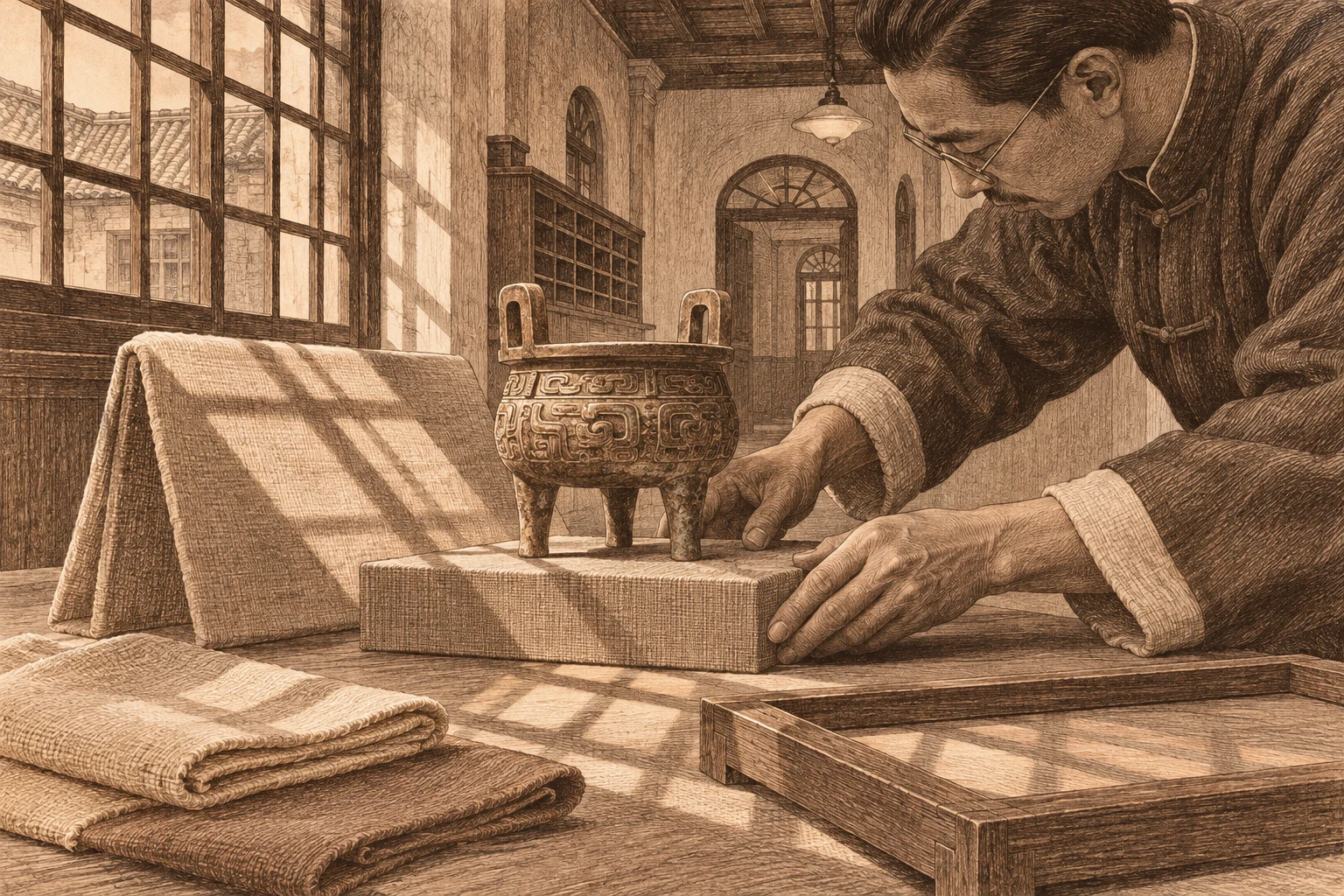
Drawn study of hands arranging a bronze vessel on a display plinth

The traces a maker leaves

The weave of cloth, the edge of a vessel and the light around a display reveal different qualities. Looking closely also reveals how the maker worked with the material.

Plan an exhibition at Xidi

Enquire about exhibitions and venue partnerships