43 Yanjiang West Road

The archive of 43 Xidi

Follow one former post office on the Pearl River from the age of maritime trade through the history of modern postal services to its life as a cultural venue. The photographs, objects and documents here are identified by source.

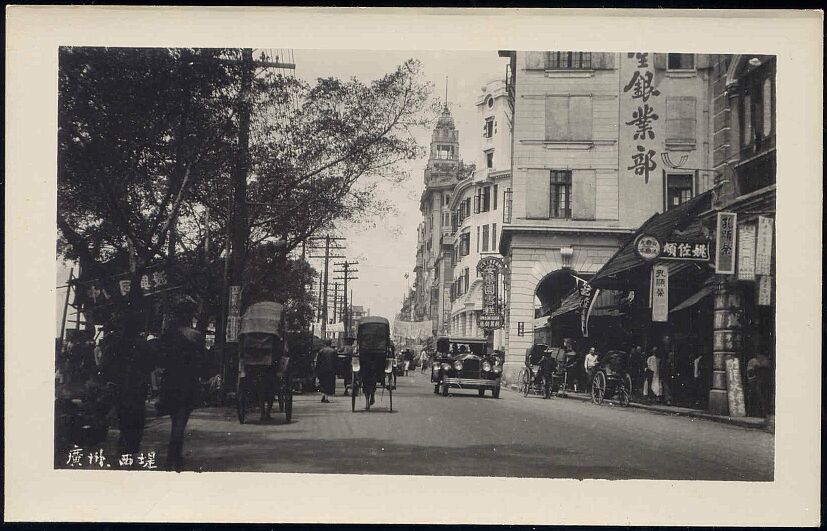
1920s · Historical archive
1920s · Wikimedia Commons

Building chronology

  1. The Qing postal service established a branch in Guangzhou, with Xidi part of the city’s early modern postal history.

    View source
  2. A fire in November destroyed the earlier post office building.

    View source
  3. The site was allocated to the Canton Customs authorities to build a new post office, beginning the history of the building that stands here today.

    View source
  4. The new post office opened, bringing a neoclassical façade to the Pearl River waterfront.

    View source
  5. The Guangdong Postal Administration took responsibility for postal operations previously overseen by Canton Customs.

    View source
  6. A wartime fire in Xidi damaged the postal building’s doors, windows and floors.

    View source
  7. Engineer Yang Yongtang led repairs that preserved the building’s original structure and exterior, with work completed in 1942.

    View source
  8. Li Yisang took office as director, beginning a new chapter in Guangdong’s postal administration.

    View source
  9. The former Guangdong Postal Administration was added to the fourth list of Guangdong’s protected cultural heritage sites in July.

    View source
  10. An international high jewellery exhibition drew young visitors into the century-old postal building.

    View source
  11. A Maritime Silk Road event at the Guangzhou Postal Museum brought Gambiered Canton gauze fashion and Cantonese export craftsmanship into the same space.

    View source
  12. A team began strengthening and conservation works on site in March, according to Guangzhou Daily’s reporting.

    View source
  13. The former post office became the Xidi Arts and Culture Centre.

    Project owner’s account

Three images, three stories from Xidi

A postcard, a view of the trading port and a painted dish bring different parts of Xidi’s history into focus.

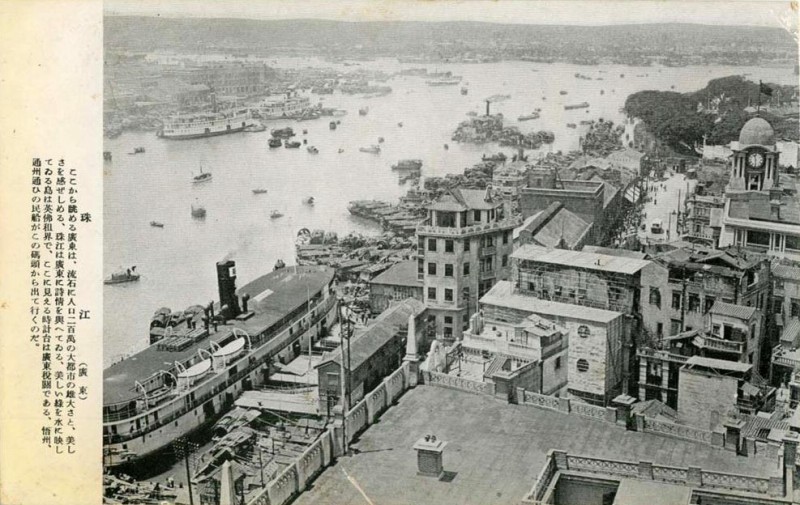
Historic colour postcard of the Xidi riverfront with the postal administration and the Customs House
1939 · Wikimedia Commons

Xidi in a postcard

A hand-coloured postcard from Guangdong Daguan, dated 1939, looks down from the vicinity of the Sun Company building. The former postal administration, Taying Tower and the Canton Customs House appear together, where postal services, trade and river traffic shared an address along the waterfront.

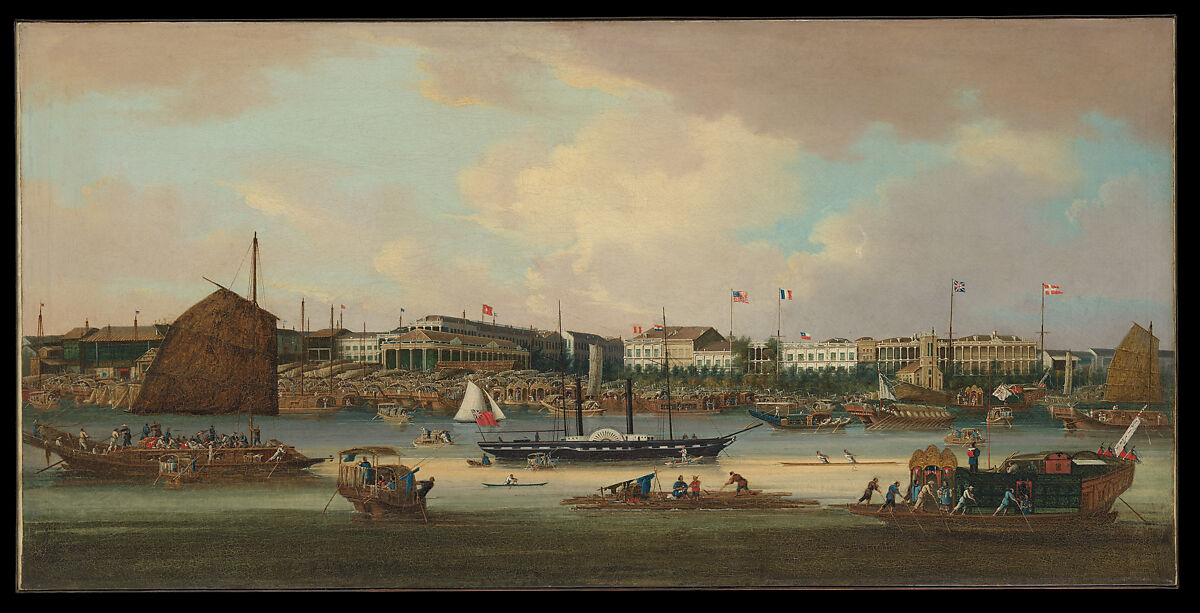
Canton Waterfront (The Hongs at Canton), 1847–56, oil painting in The Metropolitan Museum of Art
1847–1856 · The Met · Open Access

The Thirteen Hongs and overseas trade

The Qing-era Thirteen Hongs stood on a key stretch of Guangzhou’s trading waterfront. The mid-nineteenth-century painting Canton Waterfront brings trading houses and river traffic into the same view. Porcelain, silk, lacquerwork and paintings travelled through this network.

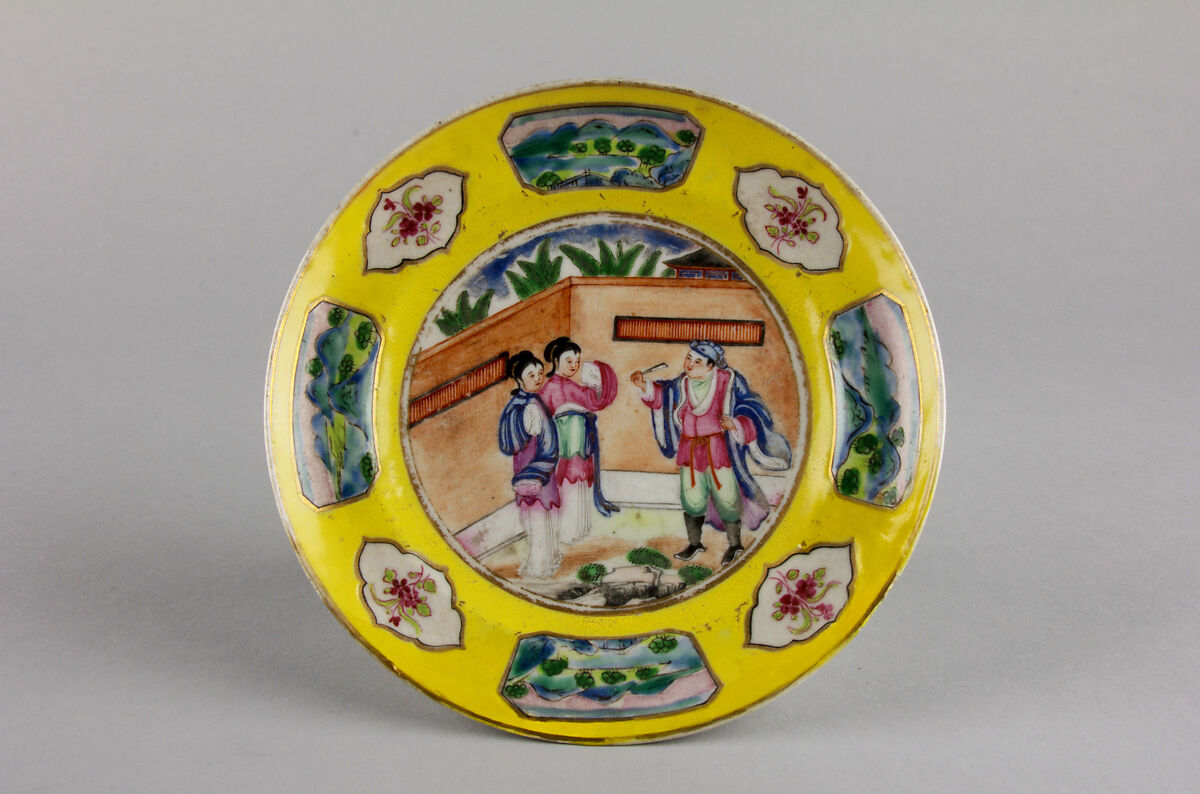
Nineteenth-century Dish with figures in The Metropolitan Museum of Art, made in Jingdezhen and painted in Canton
19th century · The Met · Open Access

Lingnan craft returns to the stage

A 2024 Maritime Silk Road programme inside the former postal building brought together Gambiered Canton gauze, Canton porcelain, embroidery, pith painting and music. This nineteenth-century dish in The Metropolitan Museum of Art offers a historical point of comparison for painted porcelain from Guangzhou.

Documents and collections

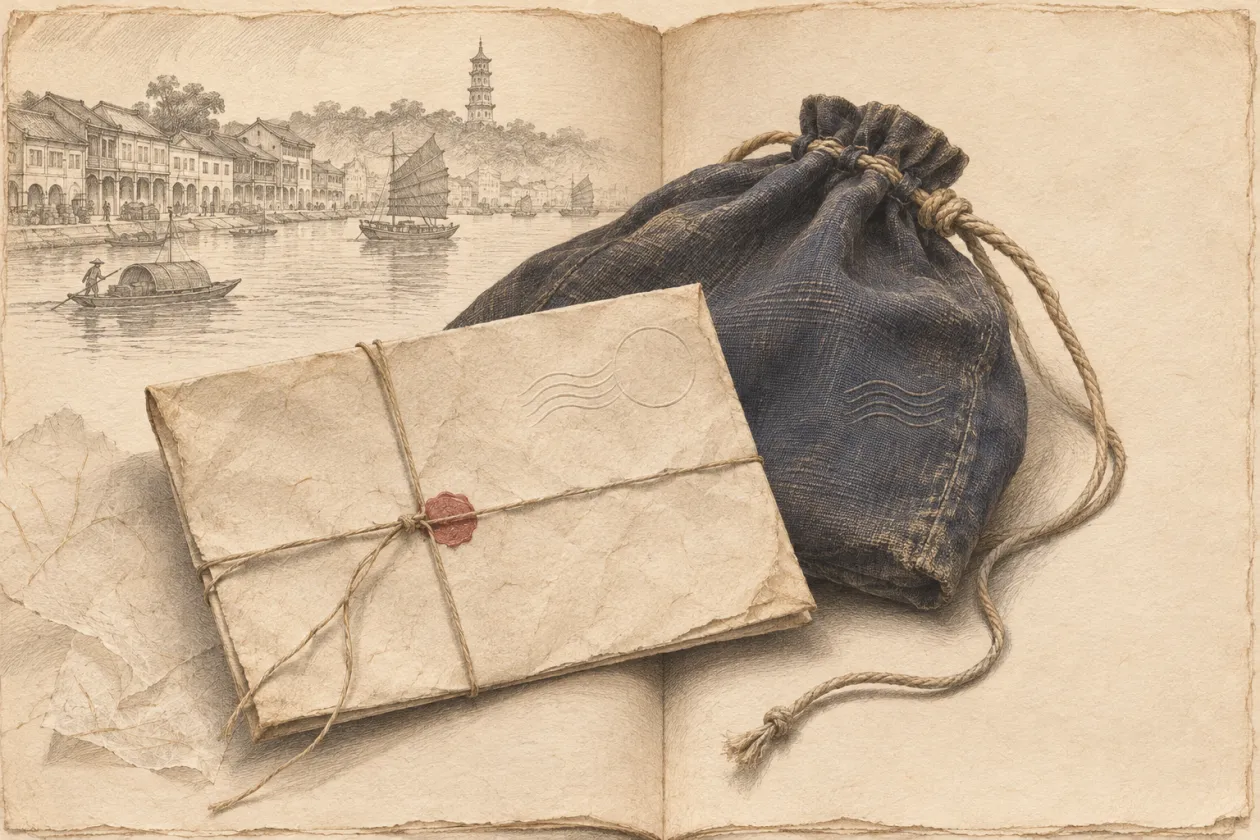
Print-style illustration of old envelopes, postmarks and writing paper

Reading Xidi on paper

Seen together, photographs, maps and postal records take us from the scale of the waterfront to the steps involved in sending a letter.